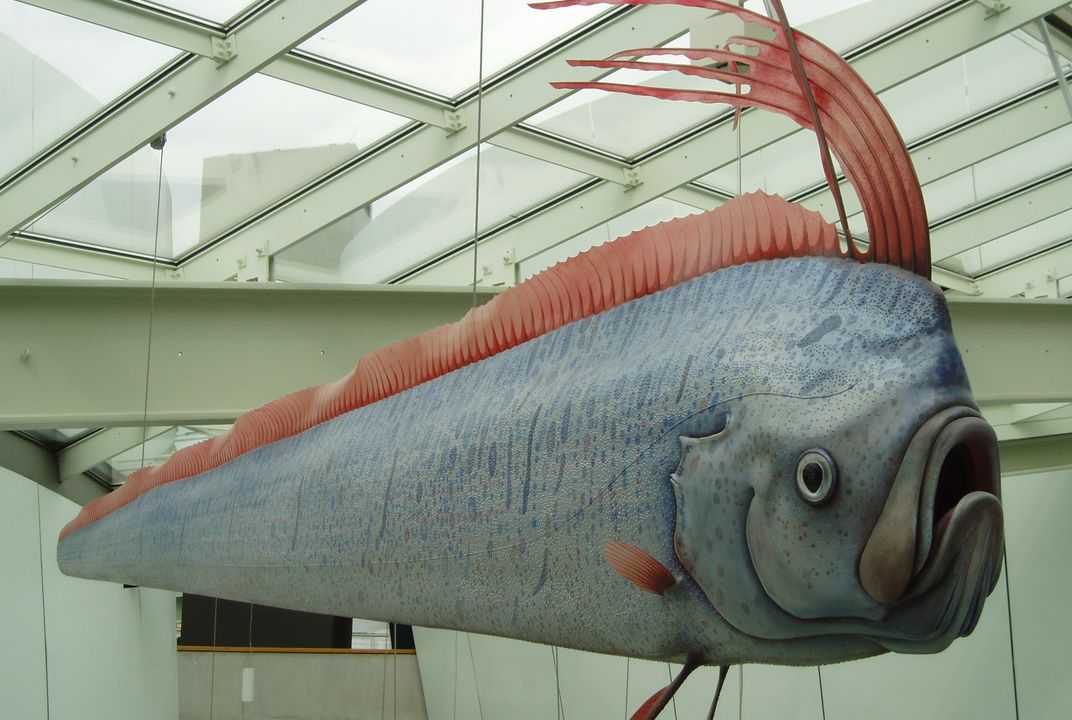
justjlm.org – The ocean, a vast and mysterious realm, teems with life forms both familiar and extraordinary. Among its most enigmatic inhabitants is the oarfish, a creature of myth and legend. With its elongated, ribbon-like body and striking red dorsal fin, the oarfish has captured the imaginations of sailors and scientists alike for centuries.
A Glimpse into the Depths
Oarfish are deep-sea dwellers, typically inhabiting the mesopelagic zone, between 200 and 1,000 meters below the surface. This twilight zone is characterized by dim light and immense pressure, making it a challenging environment for most life forms. However, the oarfish has adapted to these extreme conditions, developing a unique body shape and specialized physiology.
A Creature of Myth and Legend
The oarfish’s rarity and unusual appearance have led to countless myths and legends throughout history. In many cultures, it has been associated with sea serpents and other mythical creatures. Sailors often reported sightings of these elongated fish, sometimes attributing them to supernatural phenomena.
The Biology of the Oarfish
Oarfish belong to the family Regalecidae, which includes several species of deep-sea fish. The most well-known species is the giant oarfish (Regalecus glesne), which can grow up to 17 meters in length, making it the longest bony fish in the world.
Physical Characteristics
The oarfish’s distinctive features include:
- Elongated body: Its body is long and slender, tapering towards the tail.
- Dorsal fin: A prominent red dorsal fin runs the entire length of its back.
- Pelvic fins: Small, oar-shaped pelvic fins, which may have given the fish its name.
- Silver scales: Its body is covered in silvery scales that reflect light, helping it blend into the dark depths.
Diet and Behavior
Oarfish are primarily filter feeders, consuming plankton and small crustaceans. They have a specialized feeding mechanism that allows them to filter large volumes of water, capturing tiny food particles.
Little is known about the behavior of oarfish in their natural habitat. However, occasional sightings of live specimens have provided some insights into their movements and habits. They are often observed swimming vertically in the water column, using their long, slender bodies to propel themselves.
The Oarfish and Human Culture
The oarfish has been a source of fascination and inspiration for artists, writers, and filmmakers. Its unique appearance and mysterious nature have made it a popular subject in folklore, literature, and film.
Conservation Status
Due to their deep-sea habitat, oarfish are difficult to study and their population status is not well understood. However, they are not considered to be threatened or endangered.
Conclusion
The oarfish remains one of the most enigmatic creatures of the deep sea. Its rarity and unusual appearance continue to captivate our imaginations. As we learn more about this fascinating fish, we gain a deeper appreciation for the diversity of life in the ocean.